At the 2026 NZAIMS Conference I had the privilege of listening to an incredible talk by Dr. Ellen Joan Ford, and honestly, it completely shifted how I view human potential. If you ever need a grounded, powerful reminder of what regular people can achieve then this is it.
Ellen has spent her life redefining what it means to lead. She started her career as a construction troop commander in the New Zealand Army leading tradespeople, went on to get a PhD, launched her own business, and is raising two young boys.
But her most harrowing test came during 2021 and 2022, when she started a tiny, four-person volunteer team—including military veterans Chris Parsons and Martin Dransfield—to rescue Afghan families who had worked alongside the New Zealand Defence Force. Operating from the other side of the world in the middle of a global pandemic, with no boots on the ground and zero formal funding initially, this small team worked 30 to 40 hours a week for nine straight months. Alongside the New Zealand government taskforce, media partners like TVNZ Sunday, and incredibly generous donors, they successfully coordinated the evacuation of 563 people from a Taliban-controlled environment. They finally got to celebrate together at a massive, joyful reunion in Auckland in July 2022.
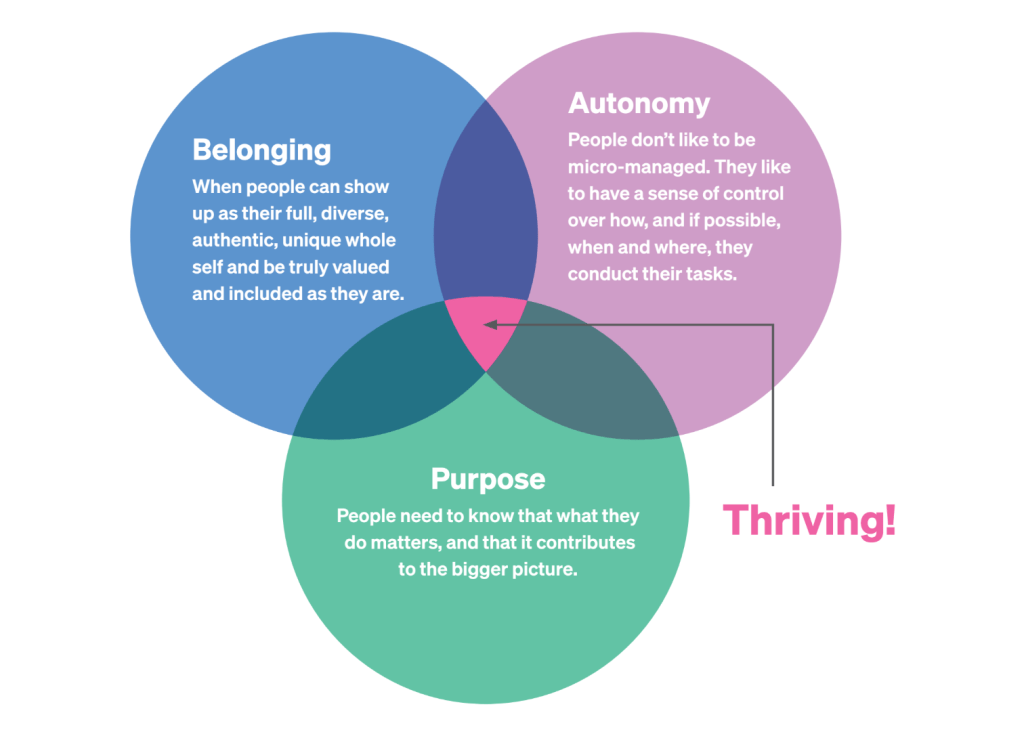
The Framework: Belonging, Autonomy, and Purpose
Ellen’s entire leadership philosophy boils down to a simple idea: when people thrive, organisations thrive. To make that happen, leaders don’t need to micromanage or act like flawless, unemotional robots. They just need to give their team three things:
- Belonging: This isn’t about “fitting in”. Fitting in means changing who you are so people accept you. Belonging means showing up as your full, messy, authentic, diverse self and being genuinely valued for it.
- Autonomy: Nobody likes being micromanaged. People need a sense of control over how they do their work, and whenever possible, when and where they do it.
- Purpose: We all want to know that what we are doing actually matters to the bigger picture.
5 Big Lessons on Human Potential
Using her military background and the insane challenges of the Afghan evacuation as a backdrop, Ellen shared some massive insights that we can all apply to our own lives right now:
1. You don’t need a title to be a leader
On Ellen’s evacuation team, there was no official boss or corporate hierarchy. Instead, leadership naturally shifted depending on the obstacle in front of them. Whoever had the right skill, network, or expertise for a specific hurdle simply stepped up and took charge. Real leadership isn’t given to you by a title on a business card; it’s about knowing when it’s your turn to step forward, and when it’s your turn to follow and support others.
2. Authenticity is your real superpower
Early in her army career, Ellen kept getting performance reviews telling her to “smile less” or “be less friendly” to fit a rigid military mold. But pretending to be someone else takes a ridiculous amount of energy. Ellen found that when she finally leaned into her own strengths—vulnerability, deep empathy, and all—she became a far more effective leader. Her team saw her vent, they saw her cry, and they saw her full personality. Caring deeply isn’t a weakness; it’s the exact fuel that keeps you from walking away when things get tough.
3. Focus on what you deliver, not the hours you log
Our society has a strange obsession with how many hours someone sits at a desk rather than what they actually achieve. Ellen proved the flaw in this thinking during an engineering deployment to Antarctica. She challenged her team to focus entirely on getting their list of tasks done to a high standard, promising that any time saved belonged to them. They knocked out the entire mission in two-thirds of the time, leaving the rest of the trip to go ice climbing and ride snowmobiles. Trusting people with autonomy unlocks true efficiency.
4. Never skip out on fun
The Afghan evacuation task was heavy, exhausting, and terrible for mental health. What kept the volunteer team going through months of high-stakes, sleepless nights was an unyielding commitment to humor. They constantly shared goofy memes, told jokes, and Ellen even made ridiculous comic sketches and a rap video just to make the team smile. Fun isn’t a distraction from serious work; it’s the vital resilience mechanism that builds tight team chemistry and keeps us human enough to survive the pressure.
5. Parent skills are master-level professional skills
Workplaces often treat parental leave as a “gap” or a career timeout, resulting in a sort of “professional invisibility” for mothers. But raising children actively hones the exact leadership traits modern teams desperately need: empathy, strict time management, master-level negotiation, patience, and immense resilience. Ellen recalled doing high-stakes media interviews and intense government taskforce meetings all while breastfeeding her baby and juggling a four-year-old. Never underestimate what a parent can pull off.
The Takeaway
Ellen’s journey reminds us that there is far more that unites us as humans than divides us. You don’t need an invitation, a promotion, or a flawless corporate mask to make a difference. You just need to lean into your purpose, claim your autonomy, and bring your whole, unfiltered self to the table. When we build spaces where people truly belong, what we can pull off together is completely limitless.


Leave a Reply