On Friday, our team had the privilege of listening to Wiremu Matthews from Kānuka Wellbeing and Leadership for an enlightening session on well-being. Wiremu’s approach, grounded in the ‘te whare tapa whā’ model, provided us with a deep and holistic understanding of well-being from a Māori perspective.
The ‘Te Whare Tapa Whā’ Model
The ‘te whare tapa whā’ model uses the symbol of the wharenui (meeting house) to illustrate the four dimensions of Māori well-being:
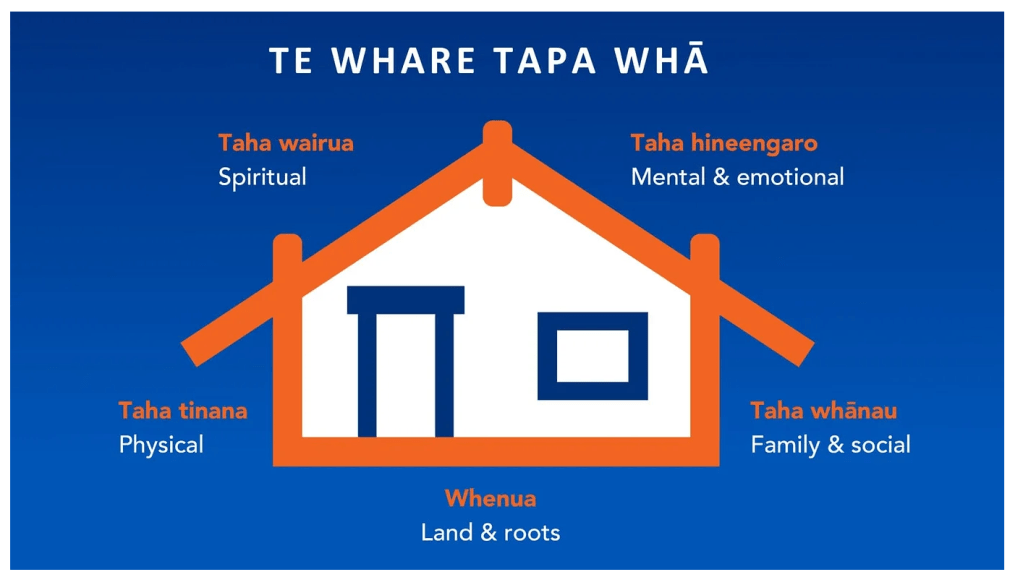
- Taha Tinana (Physical Health): The capacity for physical growth and development. Our physical being supports our essence and shelters us from the external environment.
- Taha Wairua (Spiritual Health): The capacity for faith and wider communication. The spiritual essence of a person is their life force, determining who and what we are, where we have come from, and where we are going.
- Taha Whānau (Family Health): The capacity to belong, to care, and to share. Understanding the importance of whānau (family) in contributing to and curing illness is fundamental to Māori health.
- Taha Hinengaro (Mental Health): The capacity to communicate, to think, and to feel. Mind and body are inseparable, reflecting how we see ourselves in the universe and how others perceive us.
Addressing Detrimental Thinking
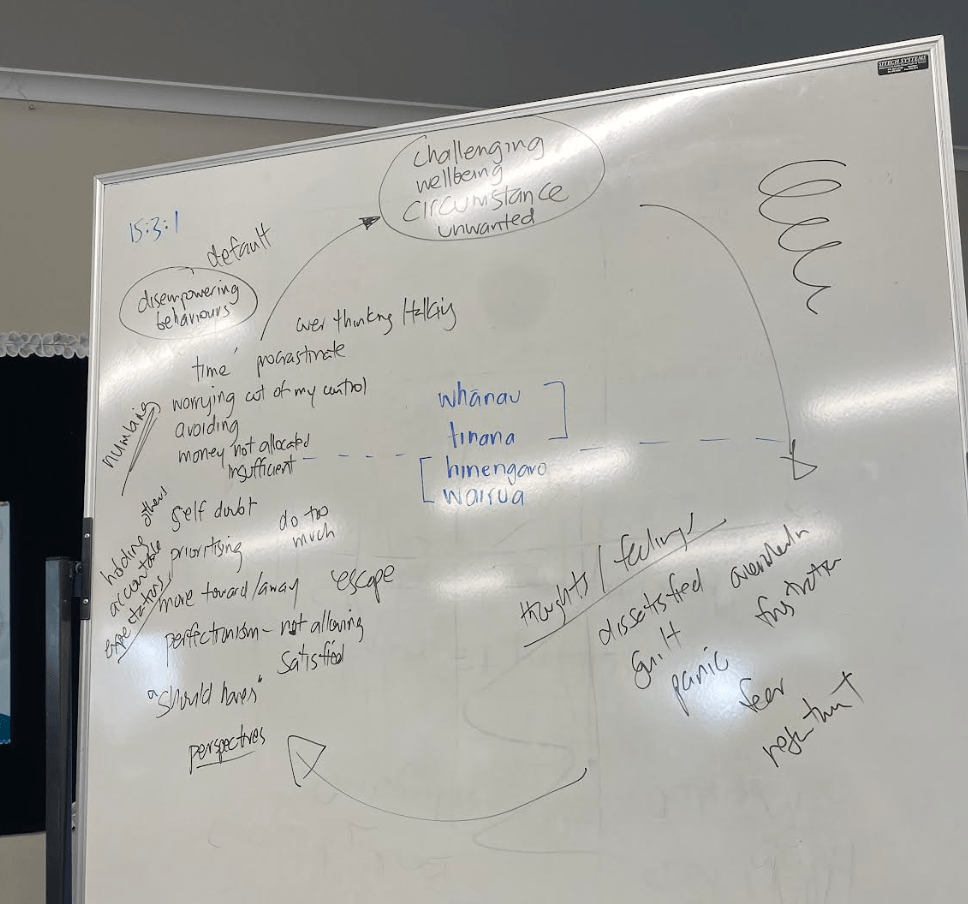
Wiremu highlighted how our current ways of thinking often undermines our well-being. He explained that issues can lead to disempowering behaviours, which in turn cause detrimental feelings or thoughts such as dissatisfaction, panic, guilt, fear, and frustration. This negative cycle creates a downward spiral that can be challenging to escape.
The Vertical ‘Te Whare Tapa Whā’ System
Wiremu challenged us to view the ‘te whare tapa whā’ model as a vertical system:
- Whānau (Family Health)
- Tinana (Physical Health)
- Hinengaro (Mental Health)
- Wairua (Spiritual Health)
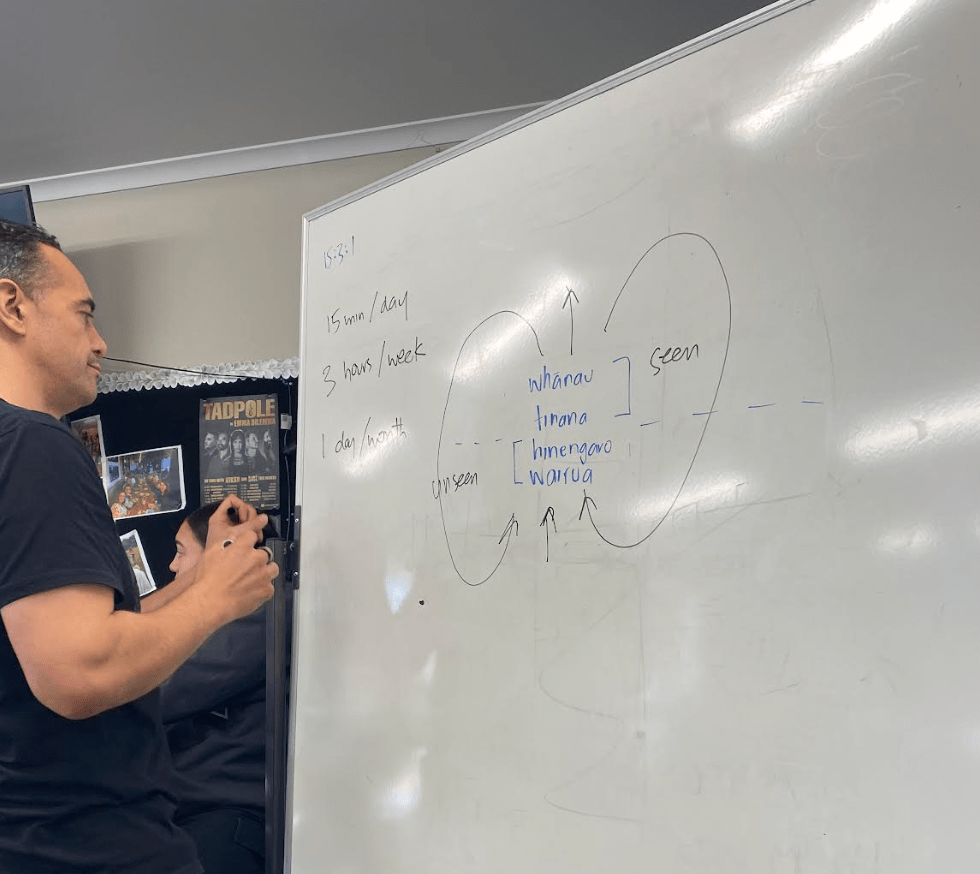
In this system, the bottom two dimensions (spiritual and mental health) are unseen, while the top two (physical and family health) are seen. Wiremu proposed that by focusing on the bottom two dimensions first, using the 15:3:1 system, we can achieve balance in our lives.
The 15:3:1 System
The 15:3:1 system is designed to create a consistent and sustainable personal well-being process. The system focuses on spending set allocation of time each, day, week and month on your Hinengaro (Mental Health) and Wairua (Spiritual Health).
- 15 minutes per day
- 3 hours per week
- 1 day per month
What you do in that time is up to you. Wiremu talked about how when he started this he need help to achieve the weekly and month times. This might be a reality for many when they first start out.
This structured approach ensures that personal well-being processes are consistent, deliberate and mindful of their purpose. It emphasises:
- Personal: Unique to each individual, specific to current activities, and achievable within the current season of life.
- Well-being: A ‘toiora’ (total well-being) approach that includes good behaviour and environment design.
- System: Creating sustainable practices that maintain mindful awareness of well-being.
Personal Reflection
What challenged me most about Wiremu’s session was the realisation that we often prioritise the top two dimensions – family and physical health – when thinking about well-being. We naturally spend time with loved ones and engage in outdoor activities.
However, Wiremu’s challenge was to focus first on our spiritual and emotional needs individually. By addressing and developing these unseen aspects, we can achieve personal balance before addressing the two aspects that are ‘seen’.
Embracing the Challenge
Wiremu’s session was insightful and encouraged us to rethink our approach to well-being. By integrating the ‘te whare tapa whā’ model into our lives and prioritizing our spiritual and mental health, we can create a more balanced and fulfilling existence. The 15:3:1 system offers a practical framework to make this transformation achievable and sustainable.

 shem banbury
Leave a reply to Diane Banbury Cancel reply