I’ve been thinking a lot about places that look like a scenic walk… but quietly carry the weight of a whole other story.
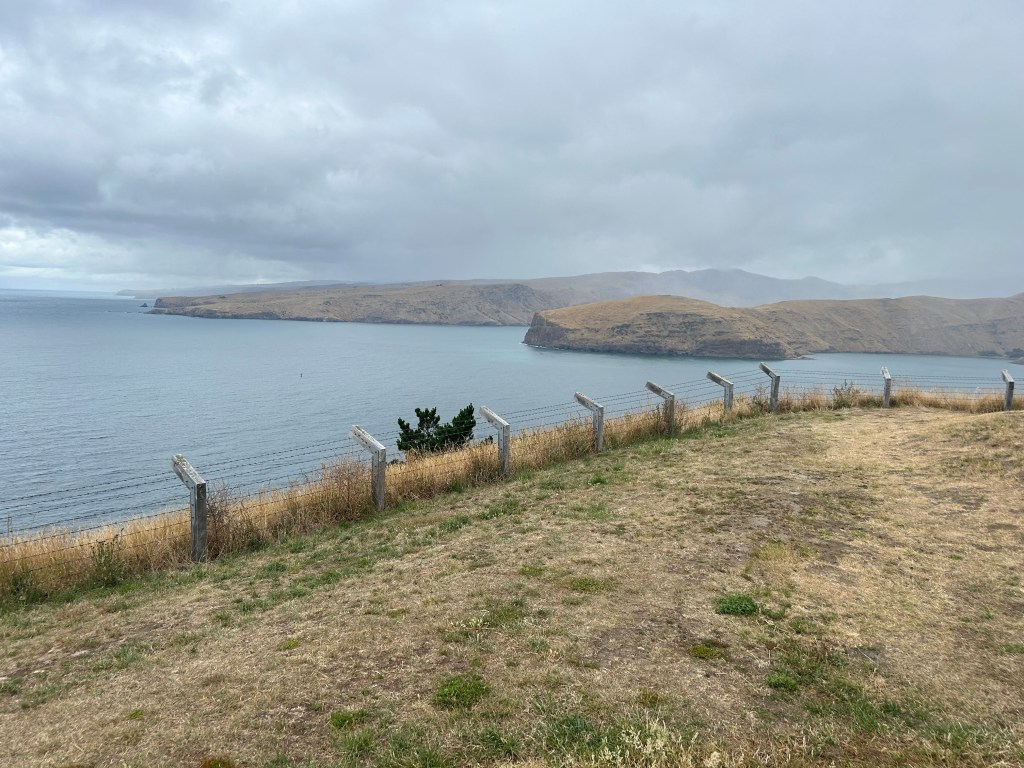
Godley Head (Awaroa) is exactly that. It’s a cracking bit of coastline on the edge of Ōtautahi (Christchurch) — dramatic cliffs, ridiculous views, sea that can’t decide if it’s friendly or furious — and then, tucked into the landscape like it was poured there (because it literally was), a WWII fortress that once operated like a small town.
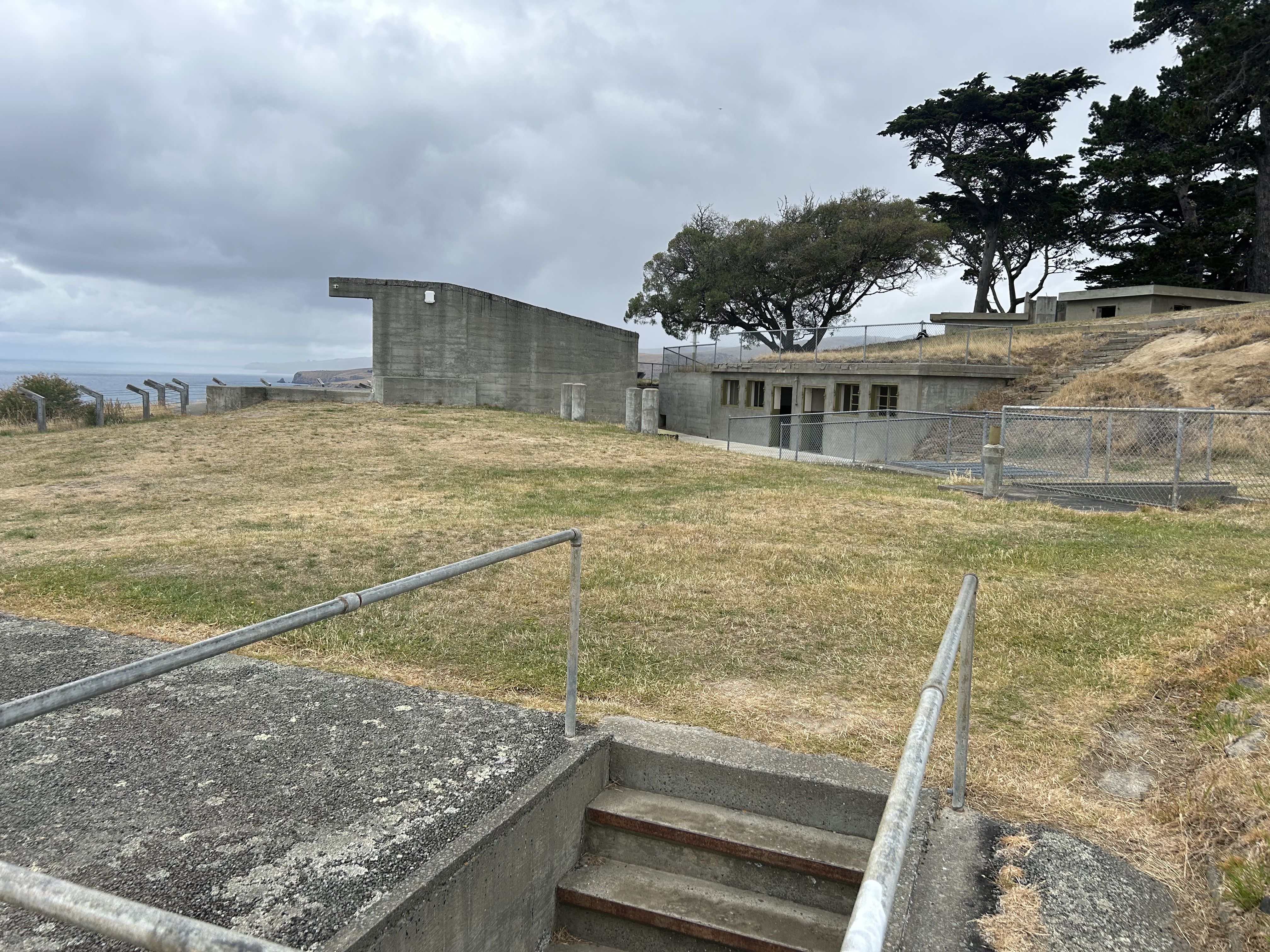
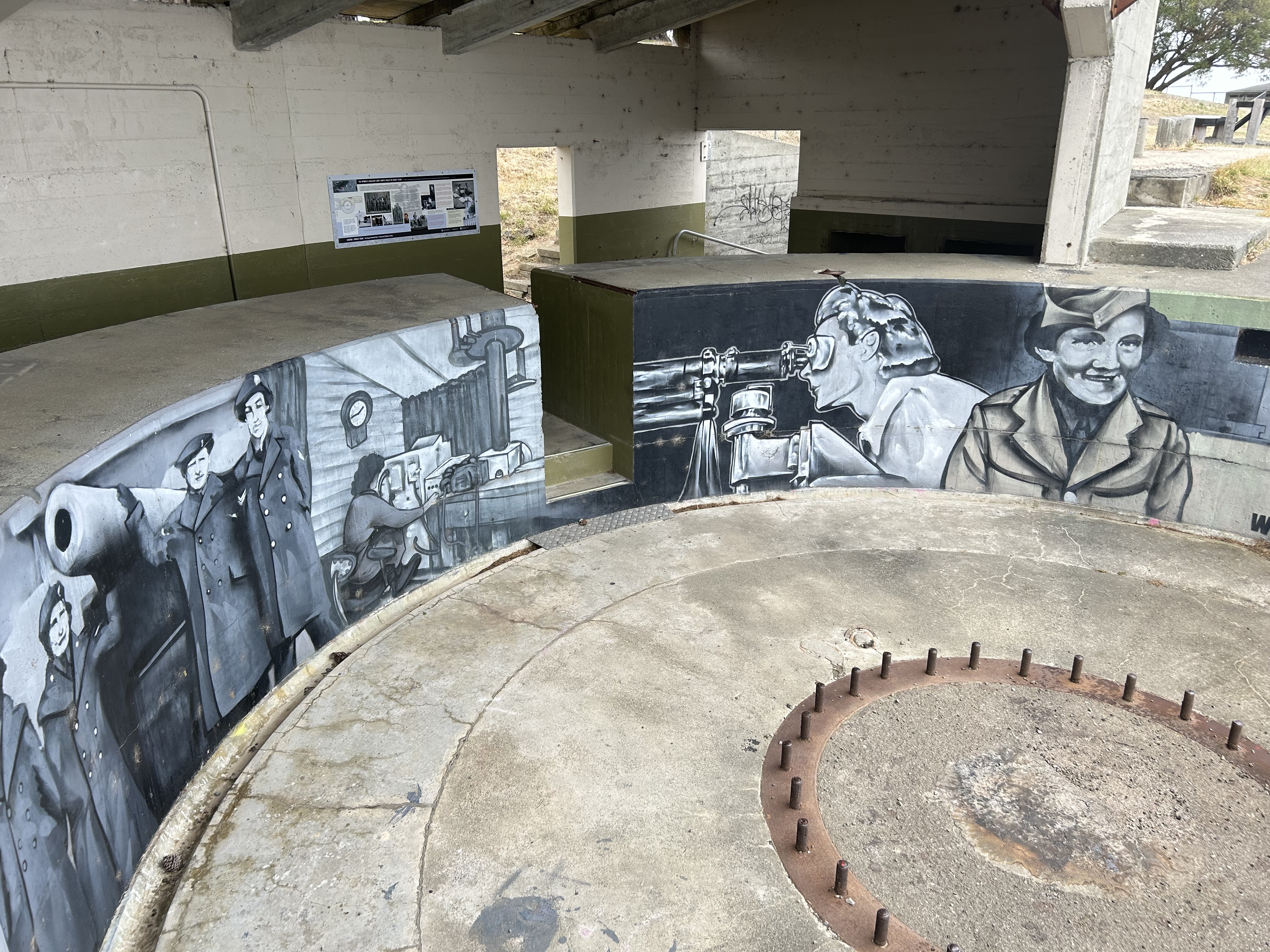
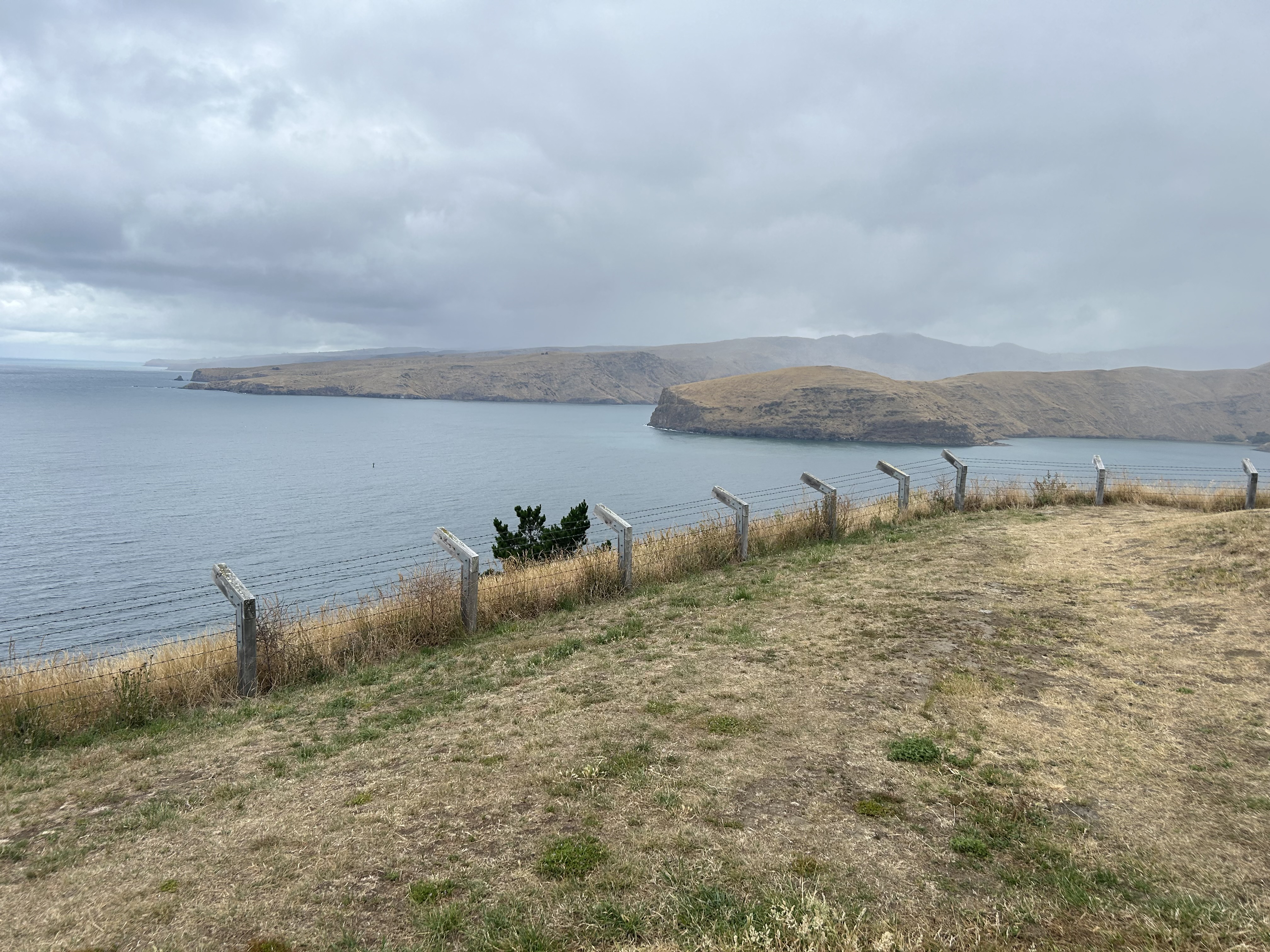

But for me, this wasn’t just a “nice walk”. It was personal.
Quick facts (because I love a good summary)
- Where: Awaroa / Godley Head, Port Hills, Ōtautahi (Christchurch)
- The walk: You can loop in from Taylors Mistake — about 7 km and roughly 3 hours return if you’re doing the full circuit.
- What you’ll see: old baches, penguin habitat, huge coastal views, and a proper slice of NZ military history.
- Tip: Check track updates before you go — parts cross both Christchurch City Council and DOC land, and things can change.
The walk in
The first thing Godley Head does is act innocent. You start out thinking: Sweet. Ocean views, a bit of a wander, maybe a snack somewhere photogenic. Then the track wraps around the headland and you realise you’re walking through a place that once braced itself for invasion — a landscape designed for beauty and defence.
It’s one of those walks where the wind tries to reposition your eyebrows, the sea sits miles below (300-400 meters) like a moving sheet of steel, and you can look back across Pegasus Bay and feel like you’ve accidentally stepped into a documentary.
And then… the concrete appears.
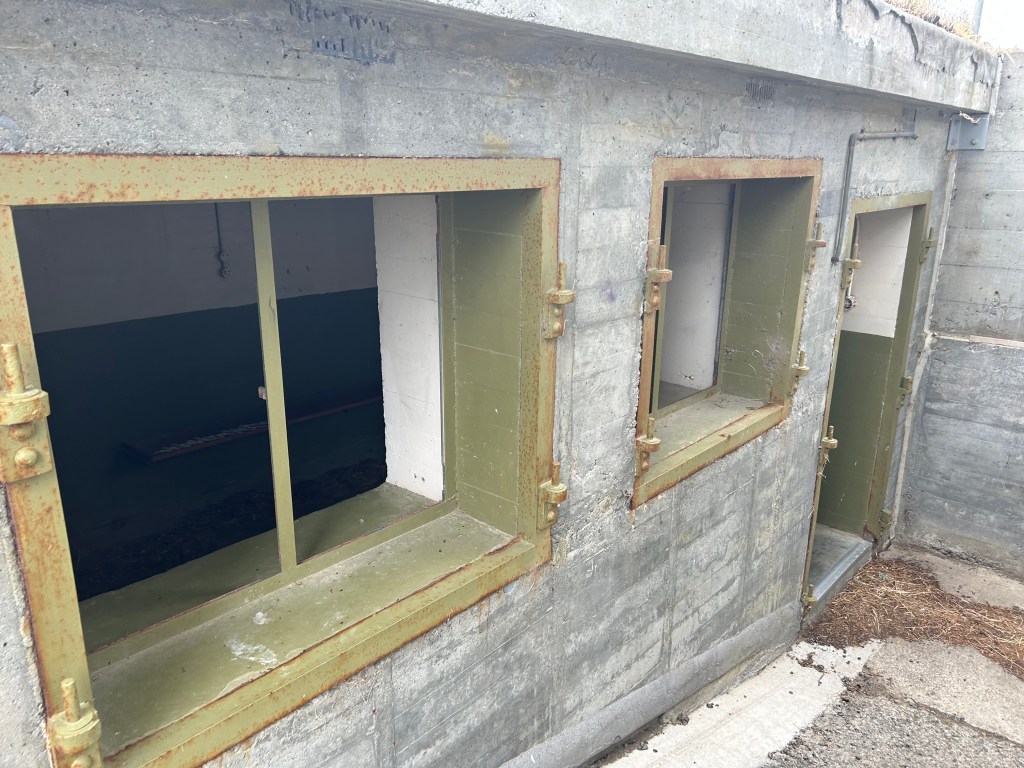
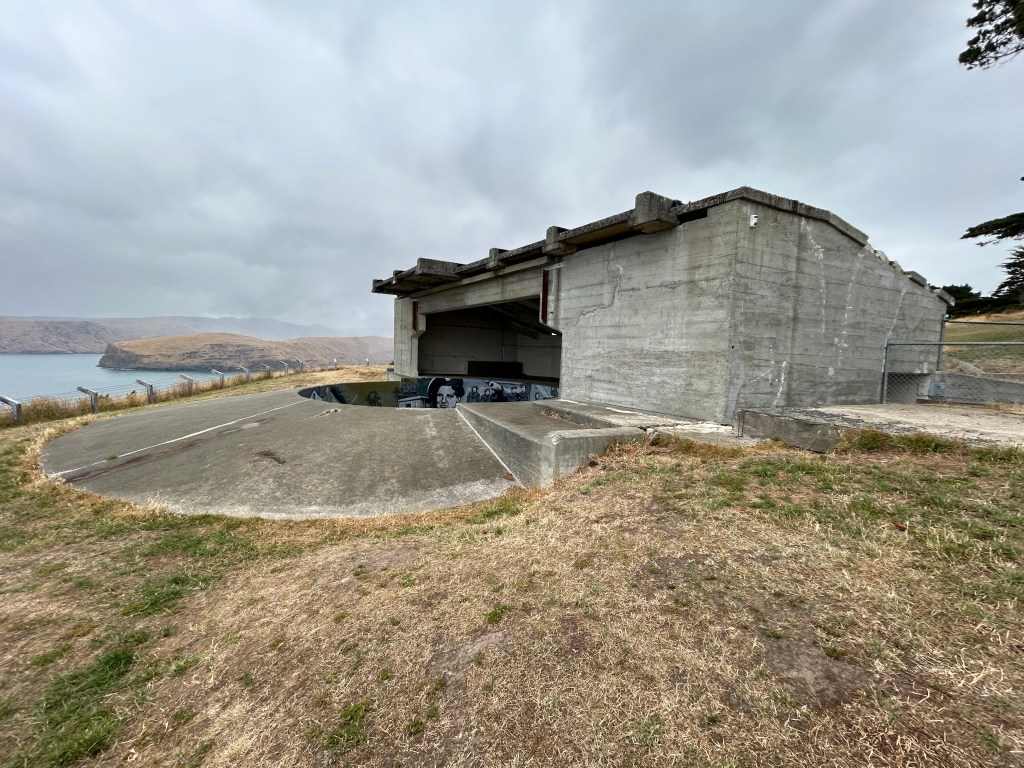
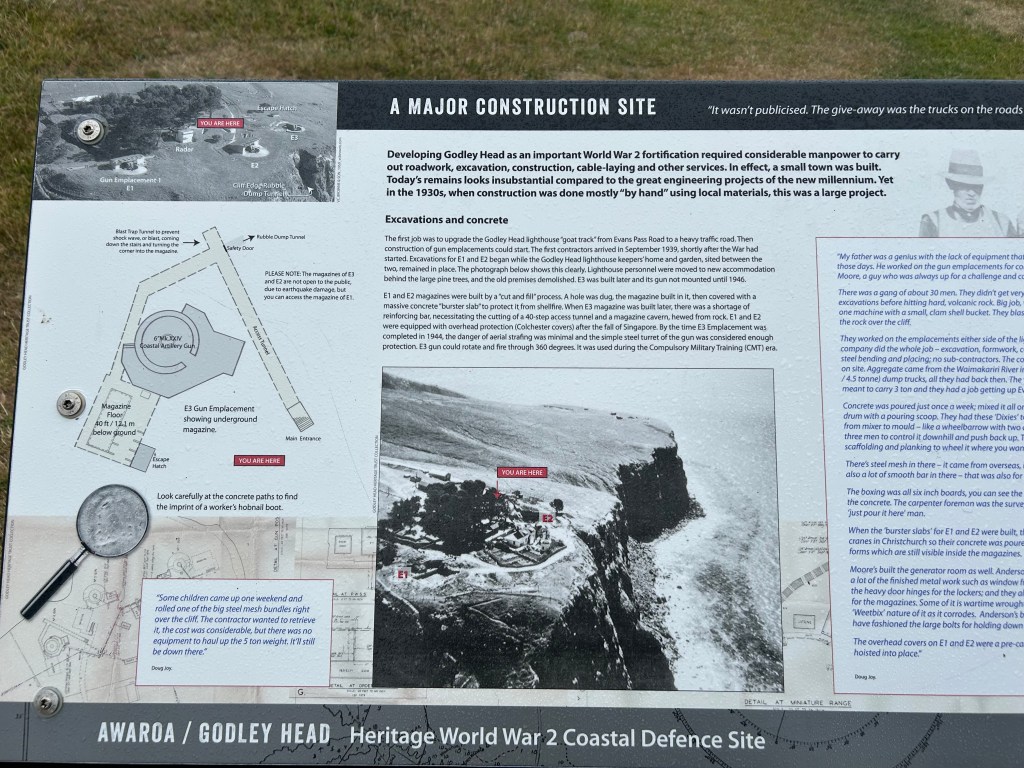
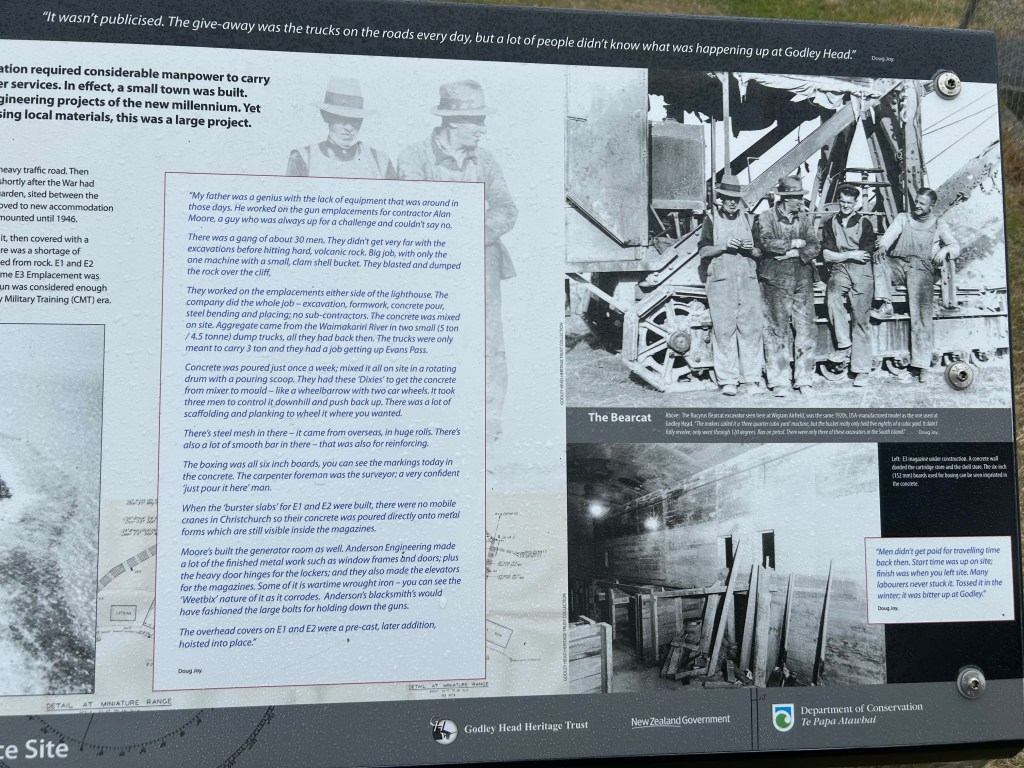
Not little bits. Not “a few ruins”. Proper structures. Emplacements. Tunnels. Thick doors. Serious engineering. Godley Head’s coastal defence site was developed during WWII and staffed at its peak by hundreds of people — it genuinely functioned like a self-contained community.
When the scenery turns into history
This place is now recognised as a Tohu Whenua site (a “heritage landmark” — basically a national nudge that says this matters). The defence system here protected Lyttelton Harbour (Whakaraupō — Lyttelton Harbour) and the wider coastline, with gun emplacements, observation posts, radar, searchlights… the works.
There were two 6-inch long-range guns operating here, and three emplacements built. Nothing says “welcome to Canterbury” like preparing to fire across the Pacific. And walking around it now is surreal. The structures are quiet, the tunnels echo, and the sea keeps doing its thing like nothing ever happened.
The Family connection
Somewhere up there is a bench with a plaque and that plaque carries two names I know well:
Gowan Banbury and Albert “Bam” Banbury — my grandparents.
Gowan served with the NZ Army and was based at Godley Head, working in the radar hut — basically the lookout for enemy submarines. Bam served with the Royal New Zealand Navy as a signalman, including time with the Eastern Fleet and in the South Pacific, and he escaped the fall of Singapore in 1942.
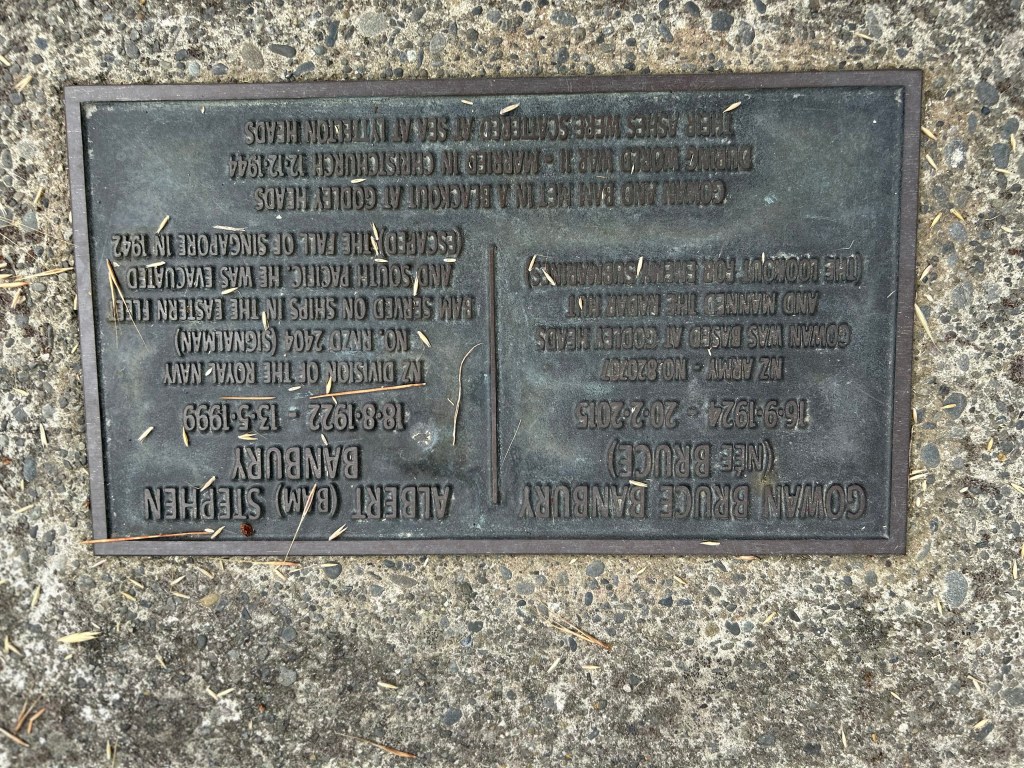

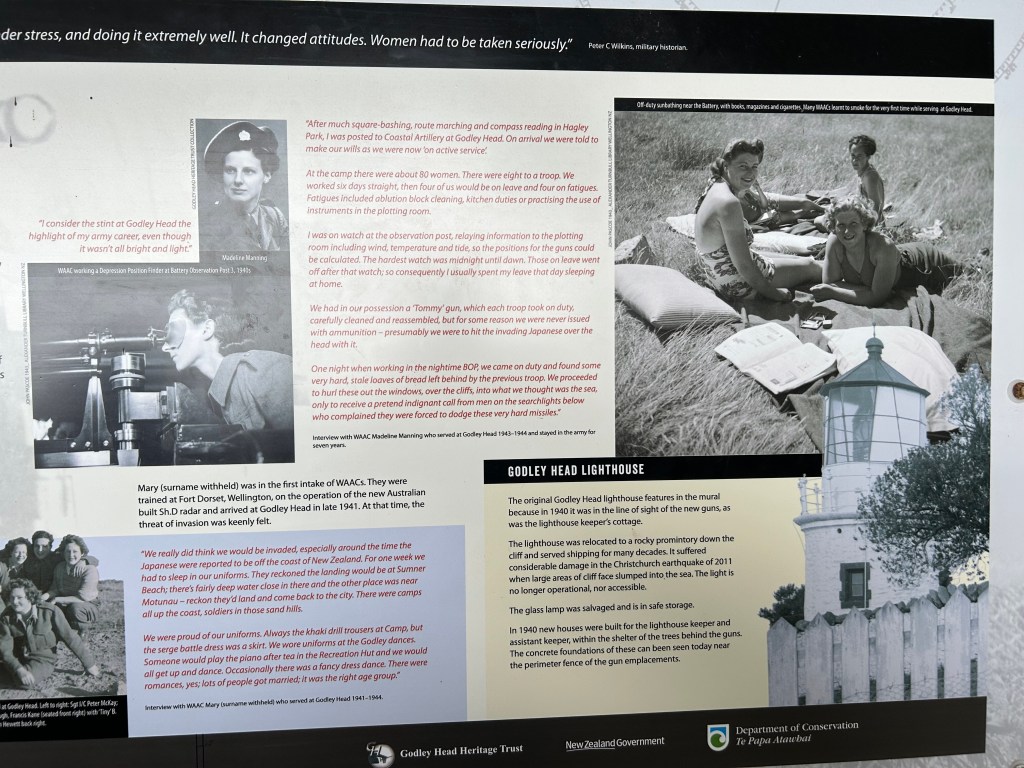
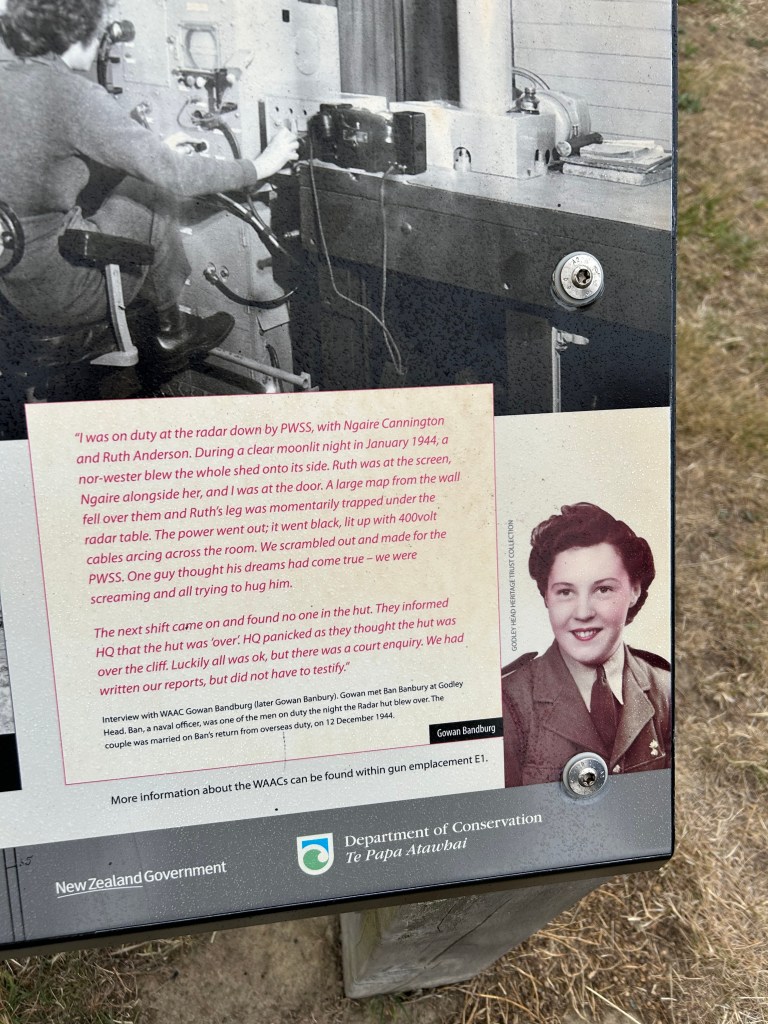
But the detail that stopped me wasn’t the numbers or dates. Because they met in a blackout at Godley Head during WWII. Not at a party. Not at a dance. Not over a flat white. A blackout.
It’s unbelievably. Like a romantic hollywood scene that writes itself: coastal wind, no lights, war in the air, and two people crossing paths in the dark.
Gowan and Bam married in Christchurch on 12.12.1944, and later their ashes were scattered at sea near Lyttelton Heads — which, honestly, feels exactly right. A full-circle ending to a story shaped by coastline.
A place that keeps revealing itself
As you wander the emplacements, you realise how layered this spot is:
- It’s a public walking track with penguins nearby (white-flippered penguins nest along this coastline), and if you’re lucky you might even spot Hector’s dolphins or seals.
- It’s a military site where people lived, worked, waited, watched, and prepared.
And it carries reminders of more recent history too — even the lighthouse story is wild: the original Godley Head lighthouse was moved during WWII because it sat in the line of sight of the guns, and later the 2011 earthquake damaged the replacement site badly.
So if you manage to make it up there… take a moment on that bench. Read the plaque. Look out to sea. Let the wind do its thing.
Some places deserve more than a quick photo.
 shem banbury
Leave a comment