Quick Tramp Details:
Distance: 34.3km total loop
Grade: Intermediate (river crossing skills needed)
Track markers: Orange triangles — visible but can get tricky around streams
Huts: Central Whirinaki Hut (25 bunks), Mangamate Hut (9 bunks)
Highlights: Whirinaki Waterfall, Taumutu and Mangamate Streams, ancient podocarp forest
Challenges: Freezing nights, constant water crossings.


Sometimes the best memories are made when things don’t go quite to plan.
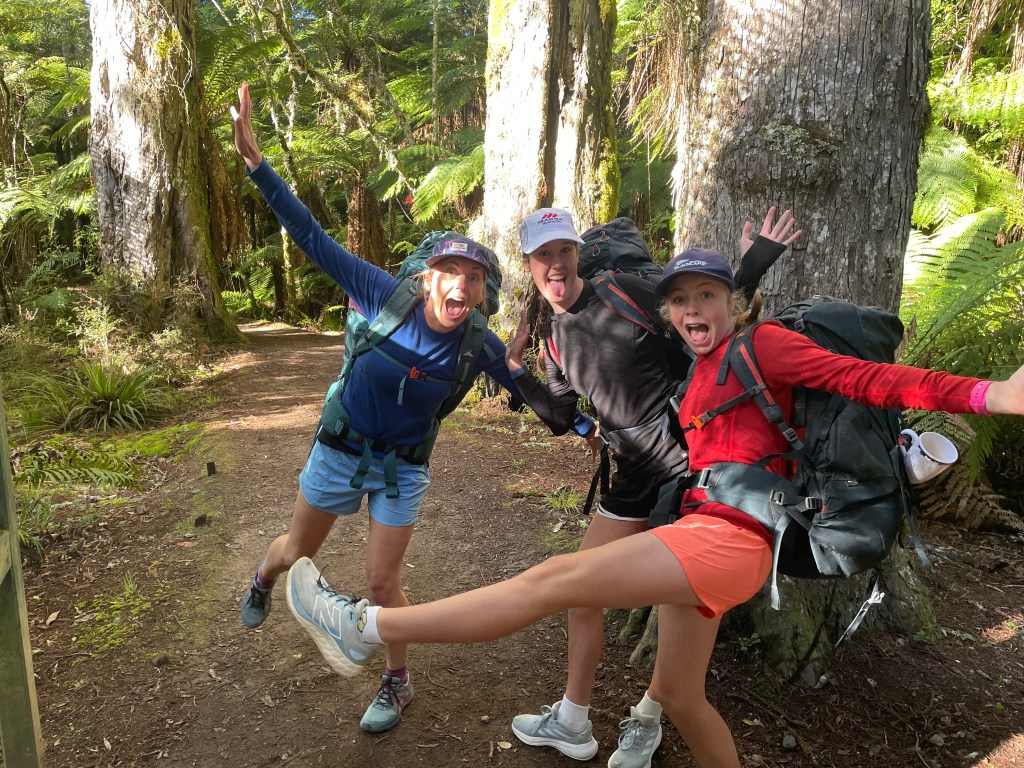
Our latest tramp — a three-day mission around the Mangamate Loop Track in Whirinaki Te Pua-a-Tāne Conservation Park — delivered exactly that: a proper backcountry adventure, packed with laughs, chills (literally), a few scares, and more than a few lessons for our young trampers-in-training, Milli and her friend Ella.
This was the girls’ first real taste of multi-day tramping. Safe to say, they got the full experience.



Day One: Dogs, Guns, and Frozen Fingers
Distance: 16.5km | Time: ~5 hours
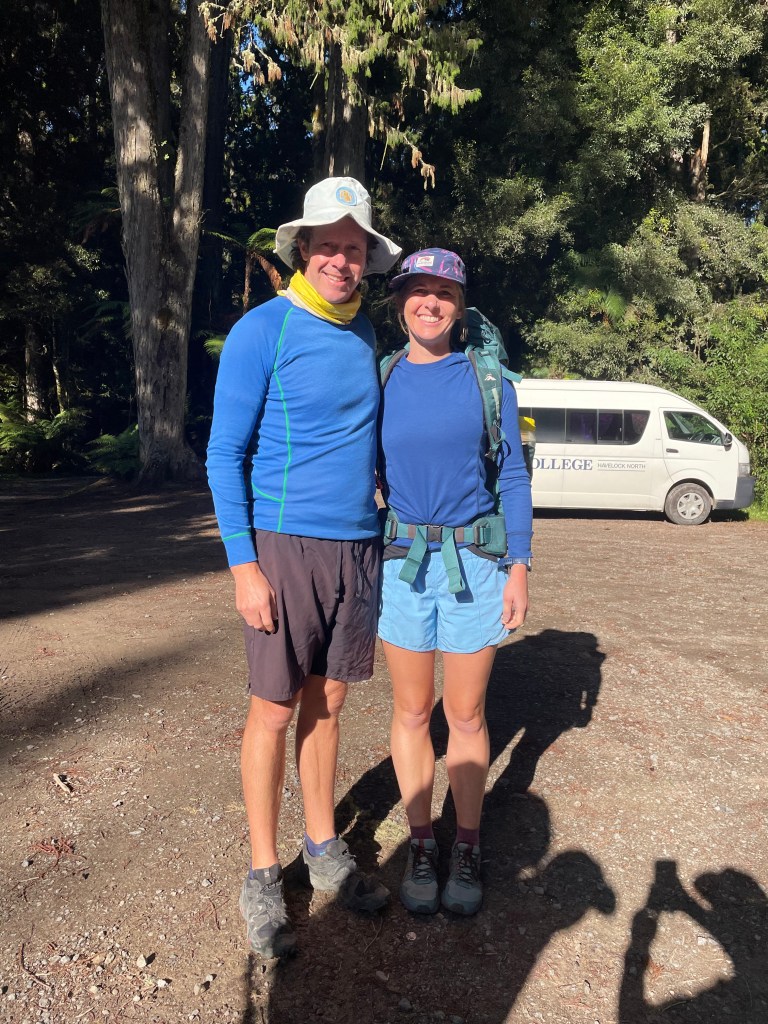
We set off from the River Road carpark, crossing the Te Whāiti-Nui-a-Toi Canyon Bridge over the Whirinaki River, and heading south along a high-quality, wide trail. For most of the day, the track felt almost like a Great Walk — well-formed and easy underfoot.
About 3.5km in, we crossed the Mangamate Bridge — an important marker we’d see again later on the trip. After that, the trail continued past the stunning Whirinaki Waterfall and Vern’s Campsite (a handy shelter and toilet stop if needed).
Around 5km in, Ella and Milli stopped dead in their tracks. Up ahead, lurking at the side of the track, was… what they swore was a wild dog hiding behind a tree stump. Cue two 14-year-olds running for their lives. Turns out it was, in fact, just a very suspicious-looking tree stump. Crisis averted — kind of.
Not long after, we bumped into a man casually strolling along the track carrying a rifle. Now, while hunting is allowed in Whirinaki, when you’re new to backcountry tramping, seeing someone with a gun isn’t exactly comforting. The girls handled it like pros though — after a healthy amount of side-eye and sticking close to Mum and Dad.
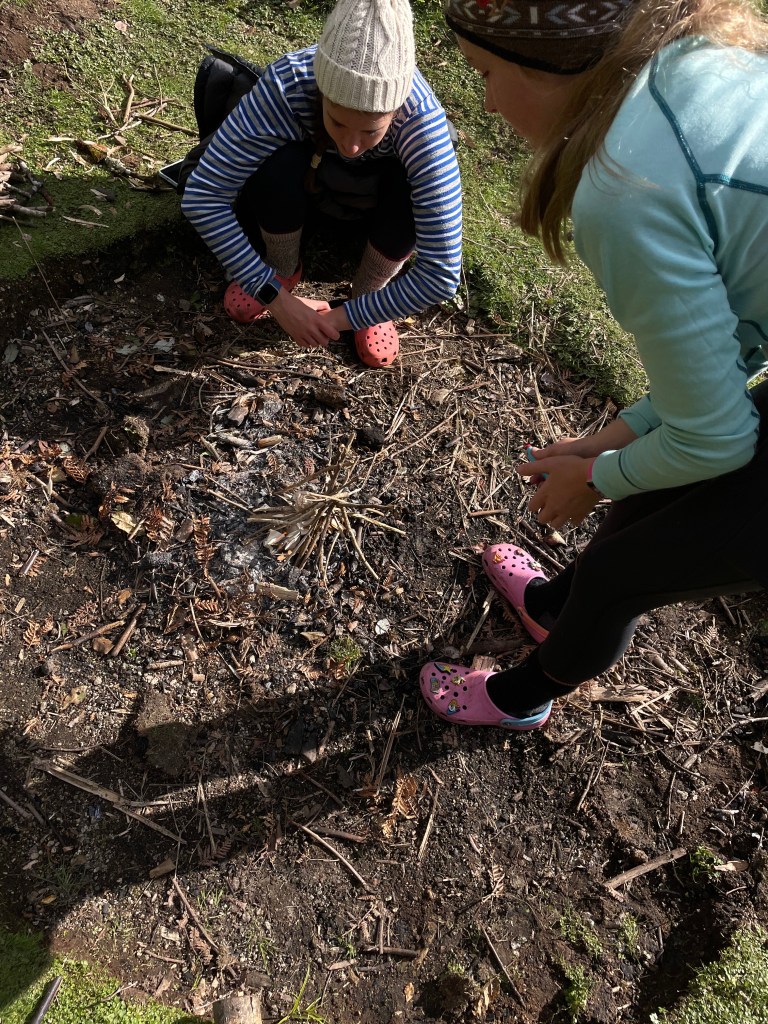
The final few kilometres to the hut felt longer, with the track becoming rougher and more overgrown. Eventually, we reached Central Whirinaki Hut — a spacious hut for 25 people, complete with bunks, a kitchen area, and a huge deck. It would’ve been perfect… if it wasn’t absolutely freezing. The temperature dropped to around zero degrees overnight, and with no dry wood to light the fire, it was a frosty night under the stars.

Day Two: Stream Life and G-String Surprises
Distance: 10km | Time: ~4.5–5 hours
In the morning, rugged up in jackets and beanies, we stood outside the hut at dawn to pay our respects for Anzac Day. We played the Last Post on a speaker and had a quiet moment, surrounded by the mist and stillness of the Whirinaki forest. A special start to Day Two.
The second day started with easy walking. We followed the Whirinaki River for about 2km until we hit Taumutu Bridge. From there, we branched left onto the Taumutu Stream, then a further kilometre later, branched left again onto the Kakanui Stream.
This is where the real fun began:
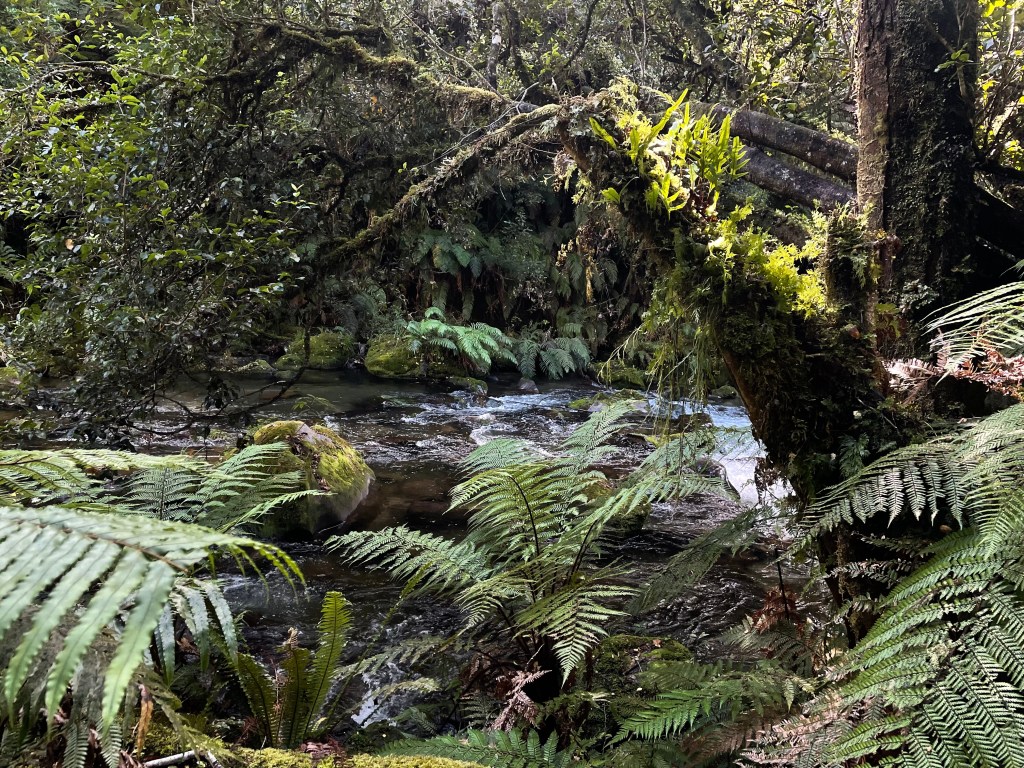
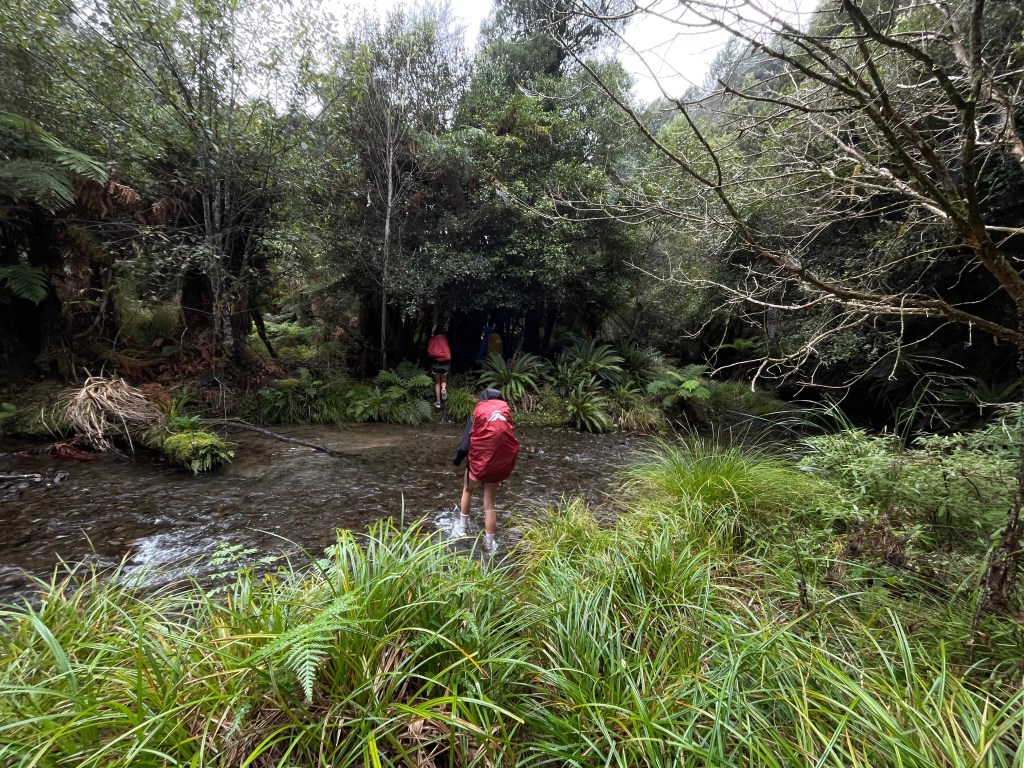
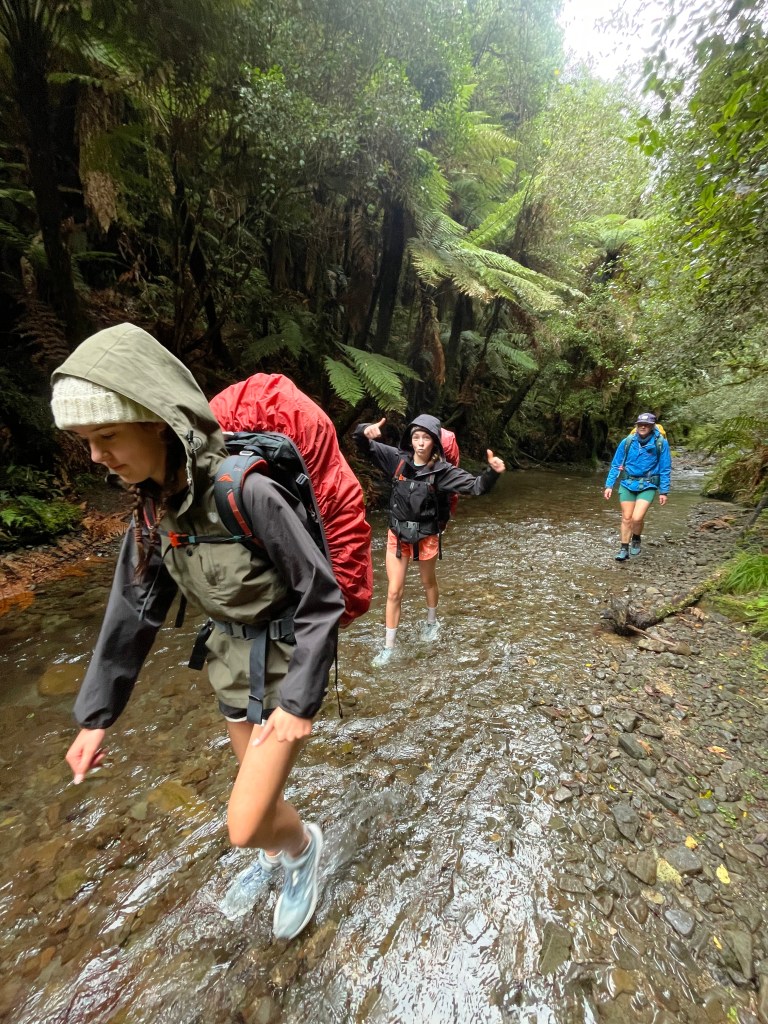
For the next 6km, we literally walked in and out of the stream, crossing about 120 times. Most of the crossings were shallow (ankle-deep), but the constant splash, balance, and stone-hopping made for a playful, challenging few hours.

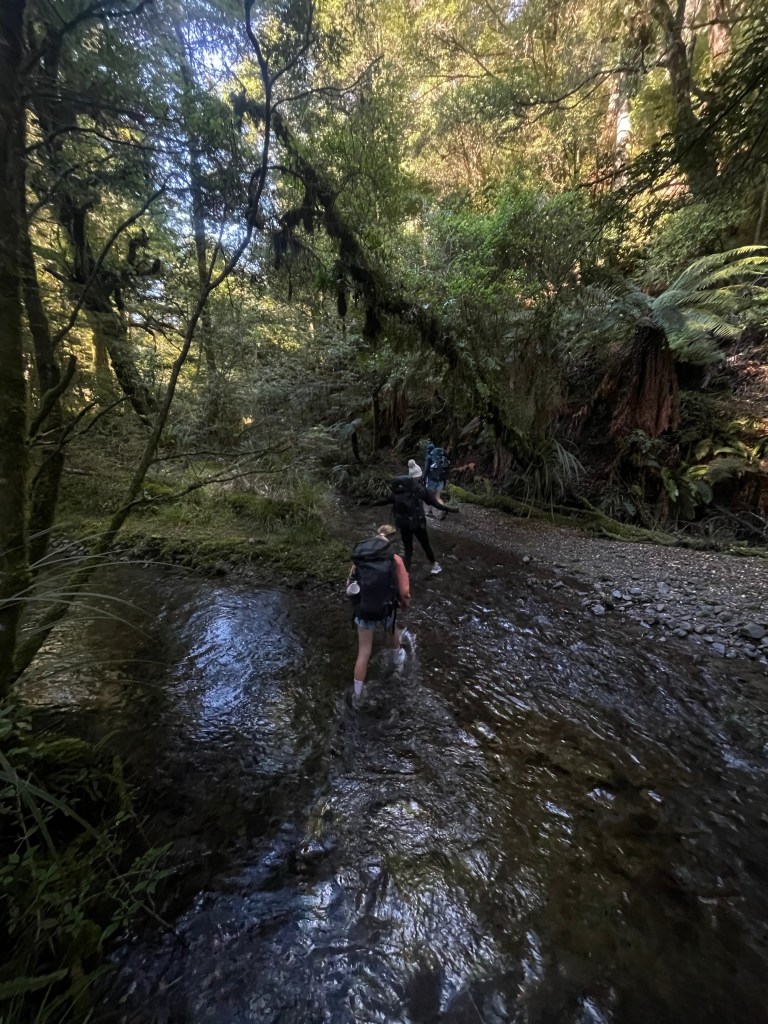

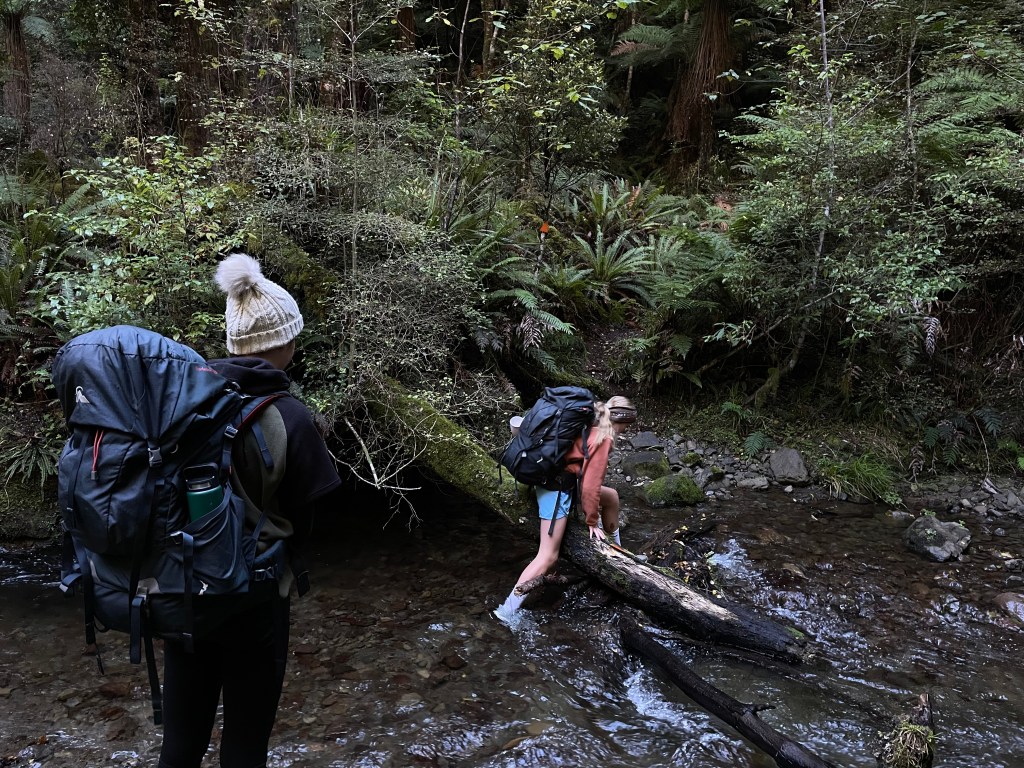
And it wasn’t just the scenery that impressed us — the conservation work happening in Whirinaki is seriously top-notch. Traplines run everywhere across the track. Stoat traps, rat traps, possum traps — they’re spaced out and carefully maintained. Because of that work, the birdlife here flourishes. Every few minutes we heard tūī, robin — and even got to see whio (blue ducks) in the streams.
The whio, or blue duck, are one of New Zealand’s rarest waterfowl — nationally vulnerable, with only around 3000 left in the wild. They live in clean, fast-flowing rivers like the ones we spent the day wading through. Their distinctive, whistling calls echoed through the valleys, and we spotted them a few times paddling along the banks — a real highlight.
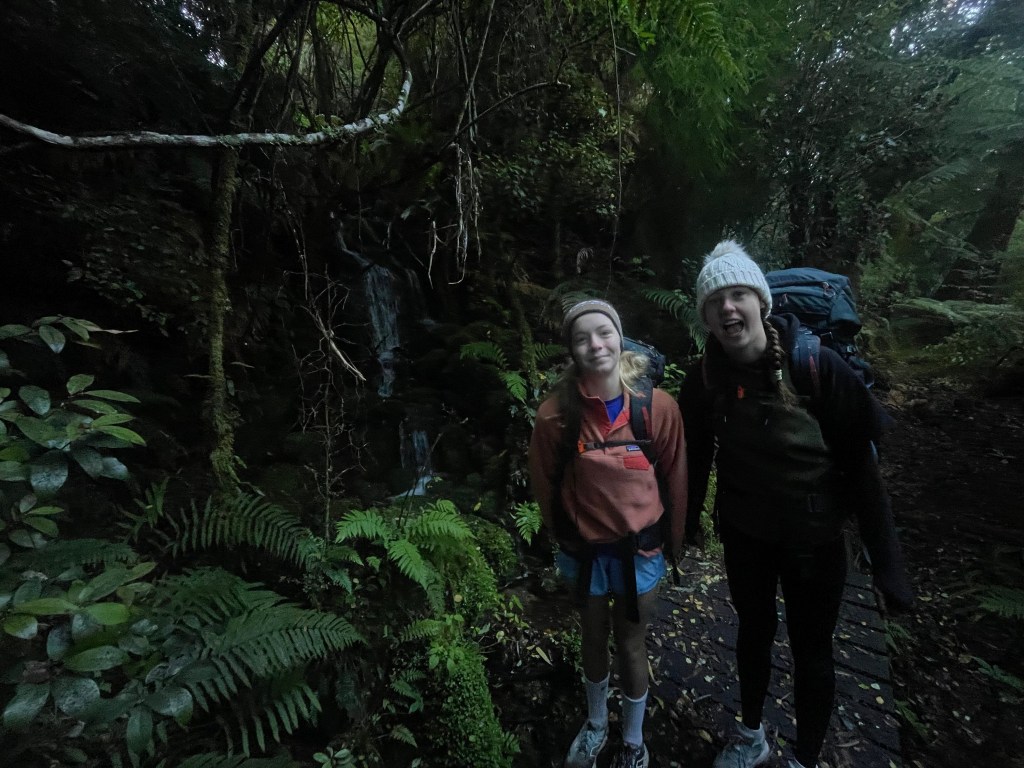
Ella and Milli did an awesome job embracing the chaos — even if Milli was still avoiding the huts’ long drop toilets at all costs. By Day Two, she was fully committed to “pop a squat” life — an essential bush skill!
Ella and Milli did an awesome job embracing the chaos — even if Milli was still avoiding the huts’ long drop toilets at all costs. By Day Two, she was fully committed to “pop a squat” life — an essential bush skill!
We arrived at Mangamate Hut in the afternoon. It’s a small, rustic 9-bunk hut perched on a ridgeline above the Mangamate Stream. With the hut full, Rachel and I pitched our new tent nearby.
The hut environment was lively and friendly… perhaps a little too friendly.
One mum decided that pyjamas were optional and strutted around the hut in nothing but a G-string, sending Milli and Ella into fits of uncontrollable laughter.
Later that evening, things got even more entertaining when one of the hut-goers accidentally set a Fruit Burst lolly on fire. For a moment, it looked like the hut might be getting a lot warmer than intended.
Food? Let’s just say every meal that night was a burnt masterpiece — rice, pasta, porridge — no dish was spared. Classic hut-life memories.



Day Three: Lost, Found, and Flipped
Distance: 10.1km | Time: ~4 hours
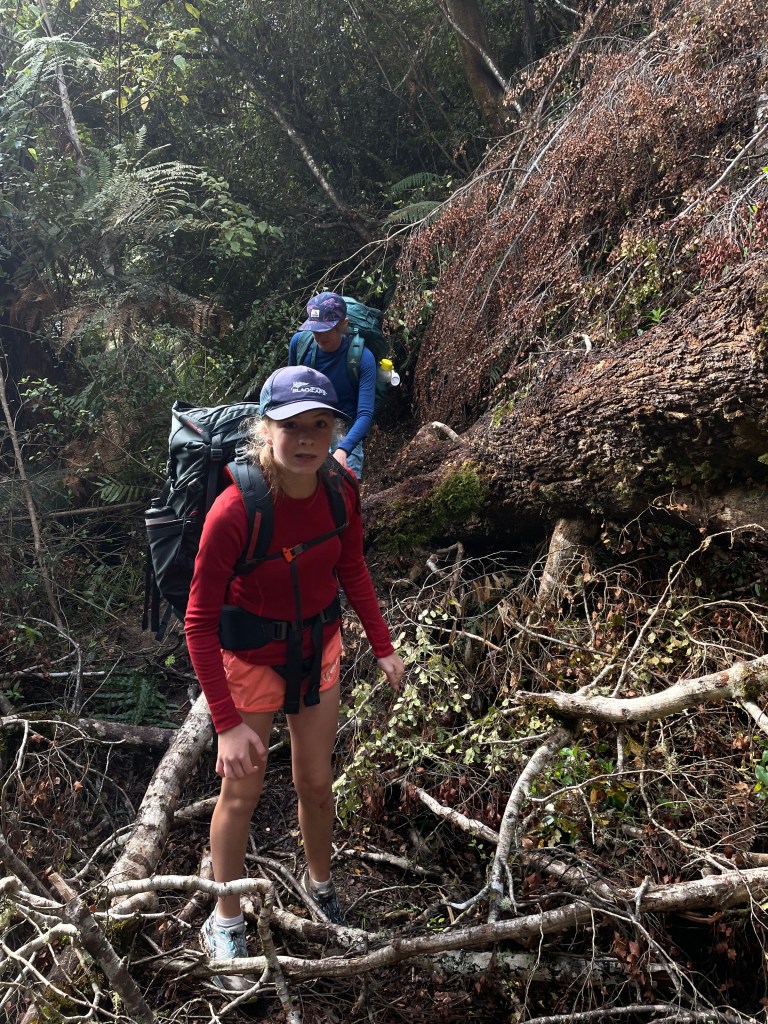
We were all a bit stiff in the morning, and — in true final-day fashion — we got lost almost immediately. Instead of following the Mangamate Stream as planned, we mistakenly took a track veering up a steep hill.
After a tough climb and some suspicious compass-checking, we made the call to turn around and bush-bash back down to the stream.
Easier said than done.
Milli and Ella struggled with the steep, muddy slope, and at one point, Milli flipped and slid down the hill, laughing and yelling all the way down. Classic backcountry initiation.
Once back in the right stream (Mangamate Stream), we settled into another 5km of in-stream travel.
This section was a bit tougher than the previous day: the water was faster and deeper — mid-calf in places — and the rocks a little slipperier. It made for slower progress, but it was all part of the challenge.
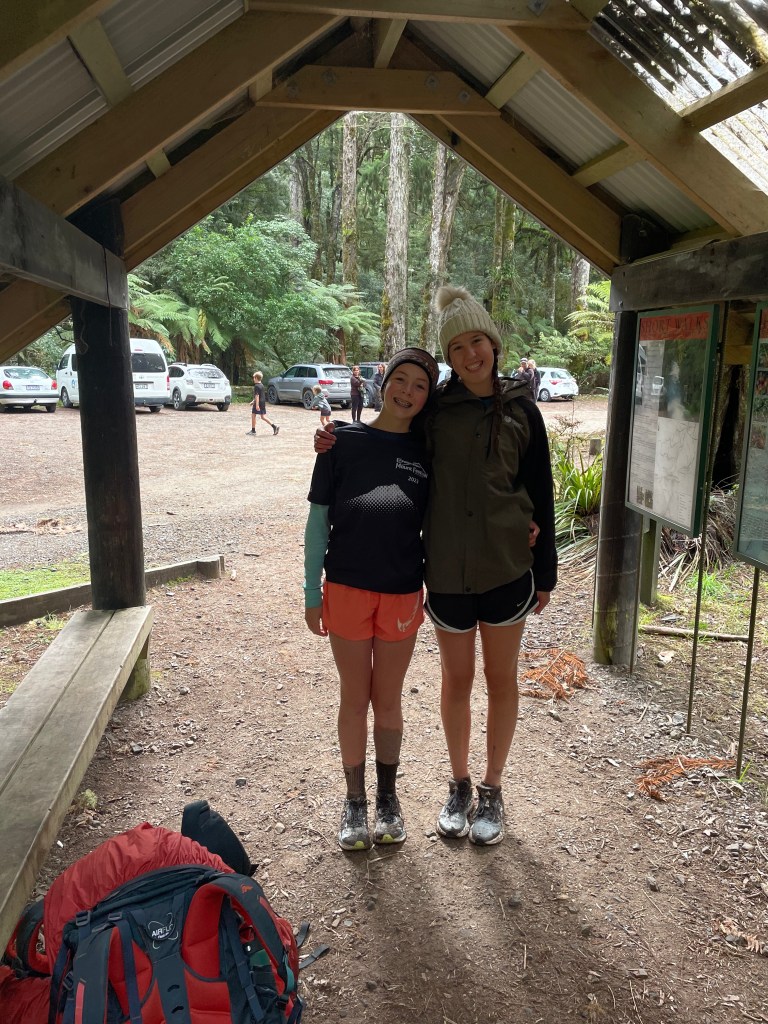
Finally, we reached the Mangamate Bridge again — linking back to the wide, comfortable track from Day One. We retraced the last 4km, tired, wet, sore — but grinning — back to River Road carpark.



Final Thoughts
It was muddy, cold, slightly chaotic — and absolutely brilliant.
The girls learned to laugh at the unexpected, handle cold nights, deal with wet socks, climb out of wrong turns, and carry on. In short, they became trampers.
And for us — watching Milli and Ella grow in confidence and spirit across three wild days was even better than the scenery.
Whirinaki Te Pua-a-Tāne delivered everything: towering podocarps, beautiful streams, magical bush, and a big slice of real adventure.
We’ll be back… maybe with a few extra matches, an extra set of dry socks, and a strong head torch for future G-string emergencies.

 shem banbury
Leave a comment