Term 1 2024 – A Strategic Initiative for Cultural and Educational Excellence
Term 2 Continuation
Following the successful implementation of our Te Reo Māori initiative in Term 1, we continued to focus on enhancing our staff’s language skills in Term 2.
We maintained our weekly Tuesday Te Reo Māori sessions, offering structured opportunities for staff to practice and improve their language proficiency. These sessions included:
- Weekly Staff Meetings: These weekly staff meetings were on a Tuesday and continued the model that we initiated in Term 1.
- Personal Learning times: Staff were given around 45 min of individual learning time. this times was used to work their way through the Reo Ora programme.
- Resource Development: Creation and sharing of teaching materials that staff could use in their classrooms to further support students’ learning.
Quizlet for Language Development
On top of this, as Deputy Principal, I signed our school up for Quizlet to develop weekly quizzes for our staff. This tool has been instrumental in supporting their personal language journeys and providing useful resources for classroom integration. The Quizlet platform enables staff to:
- Practice Word Association: Interactive flashcards and matching games help with vocabulary retention.
- Learn Correct Sentence Structure: Quizzes and activities focused on grammar and sentence construction.
- Engage in a Safe Environment: A supportive online space where staff can learn and make mistakes without pressure.
Teacher Only Day
During Term 2, we also had a Teacher Only Day. This day was split into three sections:
- Well-being Session: Focused on staff mental health and well-being.
- Writing Professional Development: Led by our Principal to enhance writing skills.
- Te Reo Activities: Dedicated to continuing our growth in Te Reo Māori.
The final block included five stations for staff to work through:
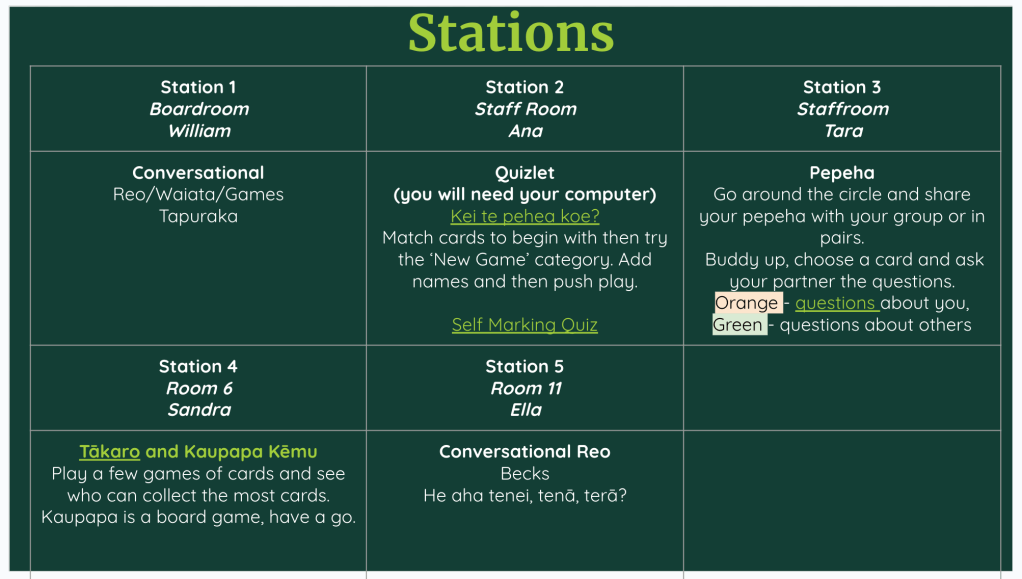
- Station 1 – Conversations: Staff engaged in conversations with one of the Whanau class teachers.
- Station 2 – Quizlet – Kei te pēhea koe?: Match cards and try the ‘New Game’ category.
- Station 3 – Pepeha: Share your pepeha with your group or in pairs. Buddy up, choose a card, and ask your partner the questions.
- Station 4 – Tākaro and Kaupapa Kēmu: Play card games and the Kaupapa board game.
- Station 5 – Conversational Reo: Practice phrases like “He aha tenei, tēnā, tērā?”

Reflections on the Day
What I liked about these different sessions was the range of activities. For me, I was in the learning pit during stations 1 and 5, completely out of my comfort zone and had to think hard. The games were fun, and I enjoyed working with other team members and challenging each other. This experience reminded me of the importance of challenging our learners. There are times to be really challenged in our learning and put on the spot – thanks, Becks. There are other times when support and consolidation activities are needed.
Cultural Competency Rubric
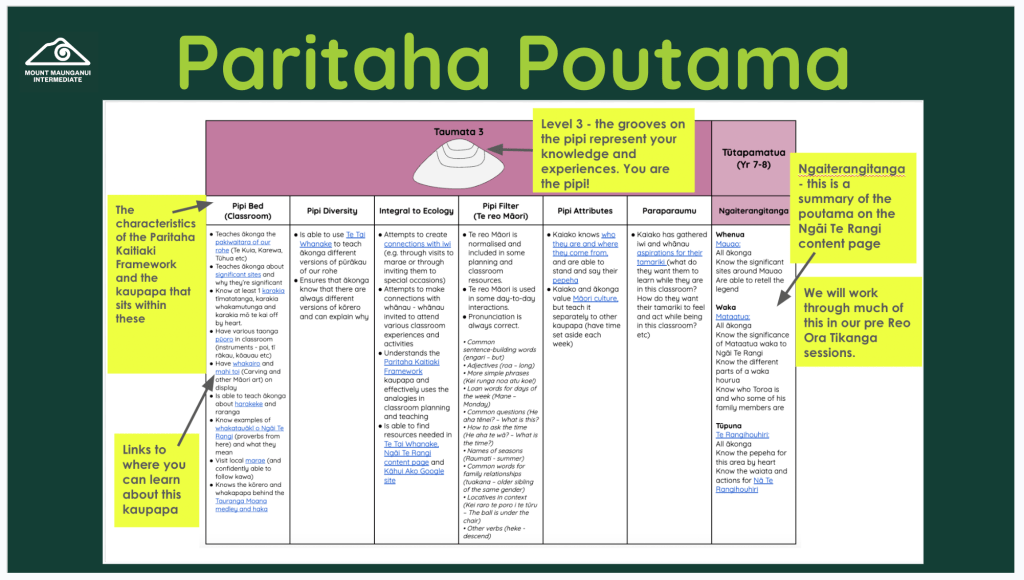
During our PD, we were also introduced to a new cultural competency rubric for teachers within our Kahui Ako. It is a fantastic resource for staff to engage with and look at opportunities for their next steps. My next step is being confident in using a karakia for kai.
Positive Outcomes
Our continued efforts have yielded positive outcomes, including:
- Enhanced Confidence: Staff members have reported increased confidence in using Te Reo Māori both in and out of the classroom.
- Improved Classroom Integration: There has been a noticeable improvement in the integration of Te Reo Māori into daily classroom activities and interactions.
Looking Ahead
As we look forward to the rest of the year, we are excited to build on the momentum gained in Terms 1 and 2. Our strategic initiatives will continue to prioritize the professional development of our staff and the incorporation of Te Reo Māori into our school culture.
We remain dedicated to celebrating and preserving the rich heritage of Te Reo Māori, ensuring that our students receive a holistic education that respects and honors the cultural diversity of Aotearoa New Zealand.
 shem banbury
Leave a comment